.webp) playtestedreview.com
playtestedreview.comThe Lone Anchor: Deconstructing the Solo Tank Paradigm and Structural Friction in Overwatch’s 5v5 Era
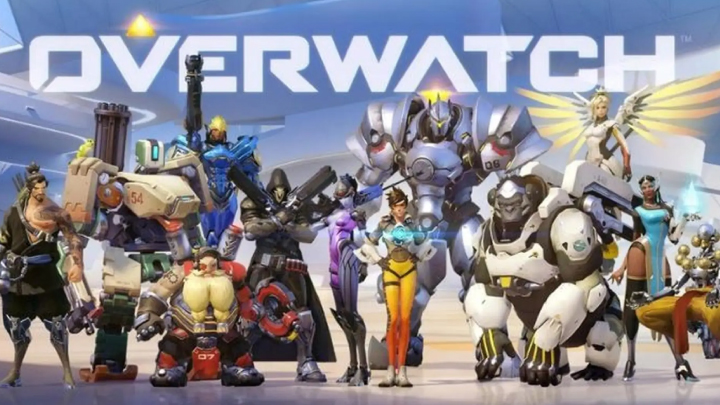
Overwatch has undergone a profound evolution since its initial debut, morphing from an exploratory hero-shooter into a complex, highly regulated competitive ecosystem. Among all the structural revisions introduced across its history, none has altered the foundational DNA of the game more dramatically than the shift from a 6v6 operational structure to a 5v5 team format. This fundamental redesign removed the secondary "off-tank" role, placing the burden of space creation, frontline mitigation, and engagement pacing onto a single player. While this change was intended to reduce visual clutter and solve queue-time bottlenecks, it fundamentally reshaped how players interact with team compositions, cooldown trades, and territorial control. This article provides an exhaustive, chronological analysis of the mechanics, systemic friction, and meta shifts created by the lone tank paradigm in Overwatch.
1. The Legacy of 6v6: Double Shielding, Tank Synergies, and Structural Bloat
To fully comprehend the structural impact of the 5v5 shift, one must first examine the systemic breakdown that occurred during the late life cycle of the original 6v6 framework. In a 6v6 ecosystem, team compositions were built around two distinct tank roles: the main tank, responsible for advancing frontline territory (e.g., Reinhardt, Orisa, Winston), and the off-tank, tasked with peeling for fragile allies, contesting off-angles, and enabling the main tank (e.g., Zarya, D.Va, Roadhog). When operating as intended, this dynamic produced rich strategic synergy, such as the classic Reinhardt-Zarya brawl or Winston-D.Va dive compositions.
However, the flexibility of the tank roster eventually created severe balancing deadlocks. The release of heroes like Sigma alongside Orisa birthed the infamous "Double Shield" meta. By stacking stationary barriers, two tanks could perpetually cycle protective abilities, neutralizing long-range hitscan pressure and rendering large portions of the damage roster ineffective. Neutralizing enemy positions devolved into endless barrier damage rather than dynamic gunplay. Furthermore, the intense coordination required between two tanks created massive skill disparities; if an off-tank failed to synergy-pick or peel correctly, the frontline collapsed instantly.
The operational overhead of balancing twelve players per match ultimately degraded the game’s health. Queue times for the damage role skyrocketed to extreme lengths because player demand leaned overwhelmingly toward DPS, while the tank role suffered from a severe player shortage. The developers faced a systemic dilemma: either permanently water down tank abilities to prevent overpowered synergy stacking, or fundamentally alter the team size. They chose the latter, cutting one tank slot entirely to pave the way for 5v5.
2. The Architecture of 5v5: Transitioning to the Solo Tank Paradigm
The transition to 5v5 dismantled the dual-tank dynamic and replaced it with a solo tank structure. Under this framework, each team consists of one tank, two damage dealers, and two supports. To offset the loss of a secondary tank, the developers applied sweeping mechanical reworks across the entire tank roster. Health pools were drastically expanded, defensive barriers were rebalanced, and individual damage output was elevated, transforming tanks from reliant anchor points into aggressive, self-sufficient brawlers.
This architectural shift immediately transformed the pace of engagement. With one fewer player on the field, visual clutter dropped significantly, and individual skill expressions became far more decisive. Eliminating a single target created an immediate 5v4 power advantage, speeding up match dynamics and reducing long, stagnant standoffs. The game transitioned from an objective-bound shield-slogging match into a fluid skirmish shooter where spatial awareness and lethal crossfire played elevated roles.
However, concentrating all frontline utility into a single hero dramatically shifted the distribution of responsibility. In 5v5, the solo tank must simultaneously absorb enemy fire, deny high ground, initiate engagements, and protect the backline. Without an off-tank to cover mistakes or split incoming utility, any positional error by a solo tank carries immediate, catastrophic consequences for the entire team.
3. Cooldown Overload: The Concentrated Crowd Control Problem
In the original 6v6 layout, crowd control (CC) abilities and targeted utility were distributed across two heavy targets. If an enemy Ana used a Sleep Dart or Biotic Grenade, or if an Elizabeth Caledonia "Calamity" Ashe threw a Dynamite, the incoming debuffs were shared between two frontline tanks. In 5v5, with only one massive hit box standing on the frontline, the entire array of enemy debuffs is systematically concentrated onto a single player.
The Cascade Effect of Targeted Debuffs
- Status Stacking: A solo tank often experiences continuous status effects—such as being anti-healed, slept, hindred, and knocked back—within a single engagement window.
- Forced Defensive Playstyles: Because surviving focused debuffs requires extreme caution, tanks are frequently forced to play passively behind natural cover rather than taking aggressive space.
- Role Passives as Band-Aids: To mitigate CC overload, developers implemented role passives like knockback reduction and reduced status durations for tanks, though these measures only partially soften the impact of focused utility.
This phenomenon created a gameplay experience commonly referred to as "the tank target practice effect." When playing heroes without hard defensive mitigations (such as Roadhog, Junker Queen, or Doomfist), players often feel as though they are not participating in active combat, but rather surviving an ongoing cycle of enemy status effects. This mechanical friction rapidly made the solo tank role emotionally taxing and mechanically punishing.
4. The Counter-Swapping Cycle: The Rise of "CounterWatch"
The single most dominant tactical habit generated by the 5v5 structure is the continuous hero counter-swapping cycle, widely dubbed "CounterWatch" by the player base. In a 6v6 environment, if the enemy ran a hero that hard-countered Winston (such as Mauga or Reaper), the Winston player could rely on their off-tank (e.g., Zarya’s projected barriers or D.Va’s Defense Matrix) to neutralize that weakness without needing to swap off their preferred hero.
In 5v5, that protective buffer no longer exists. If a solo tank picks Winston and the opposing team responds by switching to D.Va, Mauga, or Bastion, the Winston player is stripped of operational agency. Staying on an unfavorable matchup actively disadvantages the entire team. Consequently, matches devolve into an endless sequence of hero swaps in the spawn room:
``` [Player A Locks Reinhardt] ---> [Player B Swaps to Orisa] | v [Player A Forced to Swap to Zarya] <--- [Player B Responds with Mauga/Winston] ```
This dynamic strips long-term strategy from the game, replacing tactical mastery with spawn-room rock-paper-scissors. Tanks are frequently discouraged from playing their main heroes, instead forced into a revolving door of counter-picks to keep pace with the opponent's hero swaps.
5. Space Creation vs. Peeling: The Strategic Paradox of the Solo Tank
The fundamental duty of any tank is space creation—forcing enemy players off valuable high ground, contest points, and choke points. In 6v6, this duty was cleanly split: the main tank created forward space while the off-tank protected the backline from enemy flankers. In 5v5, a single tank is expected to perform both duties simultaneously, creating a tactical paradox.
If a solo tank charges forward to take space, they leave their two supports and damage dealers vulnerable to aggressive enemy flankers like Tracer, Genji, or Sombra. Conversely, if the solo tank stays back to peel for their supports, the opposing team takes control of vital high ground and chokepoints without resistance. A single player cannot occupy two physical positions at once, forcing tanks into impossible positional choices during dynamic fights.
This strategic paradox has fundamentally altered backline gameplay. Supports can no longer rely on a dedicated off-tank for protection. Instead, supports must either pick high-mobility heroes capable of escaping threats independently (e.g., Kiriko, Lucio, Moira) or run high-utility, dueling supports capable of fending off flankers on their own (e.g., Ana, Baptiste, Illari).
6. Ultimate Economy in 5v5: Dynamic Swings and Unchecked Snowballs
Ultimate ability tracking and economy management have always been core competitive pillars of Overwatch. However, reducing the team size to five players significantly altered how ultimate abilities impact team fights. In 6v6, a single ultimate elimination (turning a fight into a 6v5) was impactful, but clever defensive coordination or an off-tank ultimate could often stabilize the fight.
In 5v5, secure eliminations carry substantially higher value. Securing an early kill creates an immediate 5v4 scenario—a 20% reduction in the enemy team's operational strength—making recovery statistically difficult. As a result, fight-winning ultimate abilities (such as Graviton Surge, EMP, or Kitsune Rush) produce extreme, uncheckable snowball effects.
Key Changes in Ultimate Economy:
- Reduced Ultimate Charge from Tanks: To prevent tanks from serving as massive "ult batteries" for enemy damage dealers, systemic passives were added to reduce the ultimate energy earned from attacking tanks.
- The Solo Tank Ultimate Trade: Solo tanks are frequently forced to use their ultimate abilities purely for survival or defensive counter-engagement rather than offensive playmaking.
- Increased Weight on Support Ultimates: Defensive support ultimates (e.g., Transcendence, Sound Barrier) carry heightened responsibility, as they serve as the primary barrier against team-wiping combinations.
7. Systemic Band-Aids: Role Passives, Healing Adjustments, and the DPS Passive
Recognizing the friction inherent in the solo tank structure, developers introduced a series of global systemic adjustments. One of the most impactful changes was the introduction of role-specific passives, designed to standardize class identities and reduce reliance on specific teammate interactions.
The most controversial addition was the Damage Role Passive, which applies a healing-reduction debuff to targets damaged by DPS heroes. This mechanical change was designed to address "burst healing bloat," where high support healing outputs rendered targets effectively immortal unless hit by immediate lethal burst damage.
While the DPS passive succeeded in making damage application more impactful, it inadvertently increased pressure on the solo tank. A tank taking focused fire while under the healing-reduction debuff sees their effective health pool vaporize in seconds, regardless of how much direct healing their supports pump into them. This change further reduced the tank's tolerance for error, requiring near-flawless utilization of natural cover.
8. Psychological Fatigue and the Social Stigma of the Solo Tank
Beyond mechanical and tactical friction, the 5v5 transition introduced significant psychological fatigue for players queuing as tank. Because the tank is the singular focal point of frontline defense and engagement initiation, team performance is heavily attributed to tank performance.
When a team loses a match, player scrutiny almost universally shifts to the solo tank. A minor gap in statistical output—such as having lower mitigation numbers or fewer eliminations than the opposing tank—frequently leads to severe social friction and blame from teammates. This environment has created a widespread reluctance among casual and competitive players to queue for the tank role, recreating the exact queue-time imbalances that 5v5 was built to solve.
To cope with this pressure, many tank players adopt extreme risk-averse playstyles. They lock survivability-focused heroes (such as Orisa or Sigma) purely to avoid dying, sacrificing aggressive playmaking potential simply to avoid toxicity from their own team. This behavioral shift fundamentally diminishes the fun and dynamic hero fantasy that originally defined the class.
9. The 6v6 Nostalgia vs. 5v5 Reality: Community Divides and Test Formats
The ongoing structural challenges of 5v5 have sparked intense debates within the competitive community regarding the true path forward for Overwatch. A sizable portion of the player base regularly advocates for a return to 6v6, highlighting the tactical depth, distributed responsibility, and rich hero synergies that defined the original game.
Conversely, defenders of 5v5 point out that returning to 6v6 without addressing fundamental structural issues would simply reintroduce Double Shield metas, visual chaos, and agonizingly long DPS queue times. The development team has responded by exploring experimental playtests and public trials to evaluate variations of both formats, including modified 6v6 structures with strict tank limits and dynamic 5v5 adjustments.
This ongoing experimentation reflects a broader recognition that neither format is a silver bullet. The challenge lies in balancing mechanical readability, queue accessibility, hero agency, and role satisfaction across an increasingly diverse roster of heroes.
10. The Path Forward: Redefining Tank Identity in Modern Hero Shooters
As Overwatch continues to evolve, the development team faces the task of redefining what it means to be a "tank" in a modern 5v5 hero shooter. Simply giving tanks larger health pools and higher damage numbers has proven insufficient to resolve the systemic friction caused by counter-swapping, CC overload, and psychological pressure.
Future balancing efforts must focus on hero flexibility and dynamism. Reducing hard-counter interactions by smoothing out extreme hero matchups will be essential to breaking the "CounterWatch" cycle. Additionally, introducing game mechanics that give solo tanks more inherent resilience against status effects without requiring dedicated support pockets could restore playmaking agency to the role.
The lessons learned from the 5v5 transition extend far beyond Overwatch itself, offering a blueprint for the entire hero shooter genre. Eliminating structural bloat and lowering queue times cannot come at the expense of role health and player satisfaction. Finding the precise equilibrium between individual agency and team-based synergy remains the ultimate challenge for the future of competitive multiplayer design.
In conclusion, the transition from 6v6 to 5v5 in Overwatch represents one of the most ambitious yet controversial structural overhauls in modern gaming history. While it succeeded in streamlining match pacing, reducing visual clutter, and improving queue times for damage players, it fundamentally overloaded the solo tank role with concentrated utility, counter-swapping pressure, and social responsibility. Overcoming these challenges requires continuous mechanical innovation, systemic rebalancing, and a clear vision for tank identity. As Overwatch continues to refine its 5v5 ecosystem, the game’s ultimate success will depend on its ability to make frontline play feel empowering, dynamic, and fun once again.