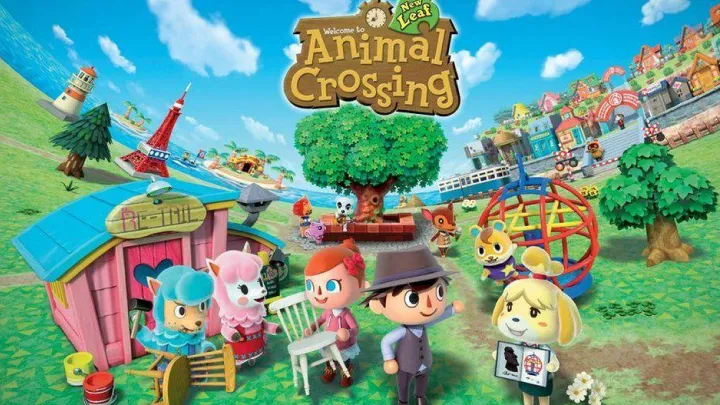


Animal Crossing: New Horizons is more than just a life simulation game; it is a digital canvas that allows for unparalleled creative expression. When you first step off the Dodo Airlines plane onto a deserted island, the possibilities can feel as vast as the ocean surrounding you. From the humble beginnings of living in a tent to the grand achievement of hosting a K.K. Slider concert and terraforming the earth itself, the journey is meant to be savored. However, for those looking to maximize their efficiency and design a truly world-class getaway, understanding the "how-to" of island management is essential.
This guide will walk you through the chronological and strategic steps required to master your island. We will cover everything from initial resource gathering and Bell-making strategies to the complex art of flower breeding and neighborhood planning. Whether you are a casual player looking to relax or a perfectionist aiming for a five-star rating, these insights will help you navigate the seasonal rhythms and technical mechanics of the game. Prepare to roll up your sleeves, grab your shovel, and transform your deserted island into a bustling, beautiful community.
1. How to Establish Your Early Footing: The First 48 Hours
Your first few days on the island are about establishing a rhythm of resource collection. After Tom Nook sets you loose, your primary goal is to pay off your initial "Getaway Package" of 5,000 Nook Miles. You can achieve this quickly by completing "Nook Miles+" tasks, such as catching a few fish, picking weeds, or talking to your neighbors. Once paid off, immediately upgrade to a house; this unlocks the ability to store items, which is vital for the hoarding required in later stages of the game.
During this period, you must also focus on the "Donation Grind." Give five different species of fish or bugs to Tom Nook to trigger the arrival of Blathers the owl. Blathers is the gatekeeper of the Museum, one of the most prestigious buildings on your island. Simultaneously, help the Nooklings (Timmy and Tommy) gather materials for their shop, Nook’s Cranny. You will need 30 of each wood type and 30 Iron Nuggets. Pro tip: do not eat fruit before hitting rocks, or you will break them; instead, hit them empty-handed to get up to eight resources per rock.
2. Mastering the Art of Bell-Making: How to Fund Your Dreams
Bells make the island world go 'round, and understanding how to generate wealth early is key to paying off your multimillion-Bell home loans. One of the most consistent daily methods is finding the "Money Rock" and the "Glowing Hole." Every day, one rock on your island will yield thousands of Bells when hit, and one glowing spot on the ground can be dug up for 1,000 Bells. If you bury 10,000 Bells back into that glowing hole, it will grow into a Money Tree that produces 30,000 Bells once it matures.
For those looking for "Big Bell" energy, the Stalk Market is the way to go. Every Sunday morning, Daisy Mae arrives to sell Turnips. The goal is to buy low and sell high at Nook’s Cranny during the following week. However, Turnips rot after seven days, so this is a high-stakes gamble. For a more stable income, consider "Non-Native Fruit Farming." If your island starts with Peaches, find Apples or Cherries on a Mystery Island; these non-native fruits sell for 500 Bells each compared to the 100 Bells for your local fruit.
High-Value Income Streams:
- Bug Catching: Save your expensive bugs (like Scorpions or Tarantulas) for Flick, who buys them for 1.5x the standard price.
- Fish Selling: Save rare fish (like Coelacanths or Sharks) for C.J., who also pays a 1.5x premium.
- Deep-Sea Diving: Purchase a Wet Suit and dive for Sea Creatures; they generally have higher base prices than common fish.
3. How to Unlock the Resident Services Building and K.K. Slider
The real game begins once your Resident Services tent upgrades into a full building. To trigger this, you must have invited three new villagers to your island and helped build their furniture. Once the building is complete, Isabelle arrives, and the "Project K" mission starts. Your ultimate goal is to bring your island to a 3-star rating so the famous musician K.K. Slider will perform. To do this, you need a balance of nature (trees and flowers) and development (furniture and fences).
Isabelle will give you feedback on your island's status. If she says you need more "scenery," plant more flowers and saplings. If she mentions "clutter," clear out items dropped on the ground. A quick way to boost your rating is to place every piece of furniture you own outside, even if it looks messy. Once K.K. Slider arrives and the credits roll, you unlock the Island Designer app, granting you the "god-like" powers of terraforming.
4. The Science of Botany: How to Breed Rare Hybrid Flowers
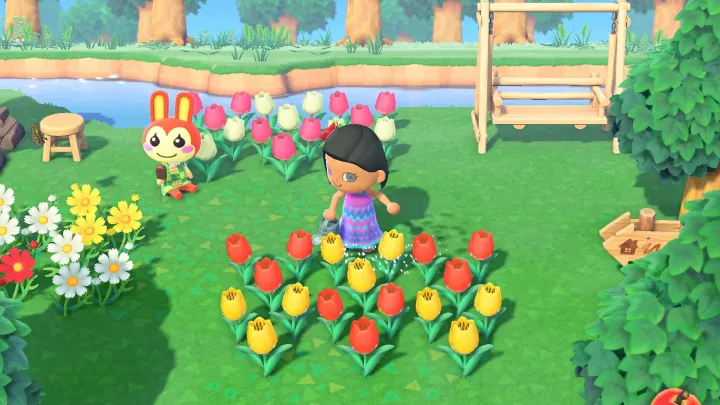
Flowers in Animal Crossing aren't just for decoration; they are a complex genetic system. While you can buy basic Red, White, and Yellow seeds, "Hybrid" colors like Purple, Blue, and Black can only be obtained through strategic cross-breeding. To breed flowers, you must plant them in a checkerboard pattern (diagonal to one another) and ensure they are watered daily. Rain counts as watering, which is a great time to see your garden expand.
The "Blue Rose" is the ultimate challenge for any island botanist, involving a multi-step process of breeding "special" reds from oranges and purples. To increase your efficiency, invite friends to water your flowers; the game features a hidden mechanic where the more visitors water a plant, the higher the "sparkle" and the higher the chance of a hybrid offspring the next morning.
Popular Hybrid Recipes:
- Orange Roses: Red + Yellow
- Pink Tulips: Red + White
- Purple Mums: White + White
- Black Lilies: Red + Red
5. How to Utilize the Island Designer App: Terraforming 101
Once you've earned your 3-star rating, the Island Designer app becomes your most powerful tool. It allows you to create paths, sculpt cliffs, and pave new rivers. When starting your first major terraforming project, it is best to "work in sections." Trying to flatten your entire island at once often leads to burnout and a loss of inspiration. Start by creating a dedicated neighborhood for your villagers or a grand entrance for your airport.
The Rules of Water and Stone:
- Water-Scaping: You can create waterfalls by standing on a cliff and using the tool on the edge. Remember that you cannot create "diagonal" waterfalls, but you can round the edges of your ponds.
- Cliff-Building: You can build up to three tiers of cliffs, but the third tier is purely decorative—you cannot climb onto it.
- Pathing: Use the custom design slot to create unique flooring. This is where the community's creativity shines, with thousands of "The Path" variations available via the Able Sisters' kiosk.
6. Curating Your Community: How to Manage Villager Personalities
Your island can host up to ten animal villagers, and managing their personalities is key to a vibrant social life. There are eight personality types: Jock, Smug, Lazy, Cranky, Normal, Peppy, Snooty, and Sisterly. Each type offers different DIY recipes and "Reactions." To have a complete collection of items, it is statistically beneficial to have at least one of each personality type residing on your island at all times.
If a villager decides they want to leave, a thought bubble will appear over their head. You can either encourage them to seek new horizons or ask them to stay. If you’re looking for a specific "dreamie" (a favorite villager), you’ll need Nook Miles Tickets to go "villager hunting" on mystery islands. This process is a rite of passage for many players, sometimes taking hundreds of tickets to find a specific character like Raymond or Shino.
7. How to Maximize the Museum and Art Gallery
Blathers’ Museum is the crown jewel of any island, and filling it requires a deep understanding of seasonality. Fish and bugs rotate every month; if you miss a Giant Trevally in the summer, you may have to wait until next year (or time travel). Use your "Critterpedia" to track which creatures you have donated—a donated item will have a small owl icon next to it in the menu.
The Art Gallery is arguably the hardest section to complete. Redd the fox will occasionally visit in his "Treasure Trawler" at the secret beach. He sells four pieces of art, but usually, only one is genuine. You must carefully inspect the paintings for "fakes"—subtle differences like the shape of a person's eyebrows or the color of a vase. Donating genuine art is the only way to expand the Museum to its full potential.
8. Designing Interior Spaces: How to Score High with the HHA
The Happy Home Academy (HHA) evaluates your house every Sunday, sending you a letter with a rank (S, A, or B). To get the highest scores, you need to understand "Feng Shui" and set bonuses. Placing yellow items in the west, red in the east, and green in the south of a room provides a significant point boost. Additionally, using "Lucky Items" like the Gold Fish Trophy or the Ring will push your score into the elite tiers.
Interior Design Tips:
- Thematic Consistency: Using furniture from the same set (e.g., the Ironwood set or the Antique set) provides a massive multiplier.
- Color Coordination: Matching the colors of your wallpaper, flooring, and furniture creates a "harmonious" room bonus.
- Interactive Items: Ensure your furniture is functional; blocking a bed or a chair can actually result in a point deduction for poor flow.
9. How to Leverage the DLC: Happy Home Paradise
For players who find the main island too restrictive, the Happy Home Paradise DLC is a game-changer. It takes you to a secondary archipelago where you work as a designer for Lottie. Here, you create vacation homes for villagers based on specific themes. The "how-to" here is simple: fulfill the client's mandatory item list, then go wild with the decorating. As you progress, you unlock the ability to polish furniture, add soundscapes, and even use partition walls.
The best part of the DLC is that the skills you learn "on the job" can be brought back to your home island. Eventually, after designing 30 vacation homes, you unlock the ability to "Remodel Resident Homes" on your own island. This is the ultimate tool for players who love their villagers but hate their default interior decorating. You can finally give your favorite Lazy villager the high-end bachelor pad they deserve.
10. Seasonal Events and Limited-Time Items: How to Stay Relevant
Animal Crossing: New Horizons is a "live" game that follows the real-world calendar. From the cherry blossoms in April to the "Toy Day" festivities in December, there is always something happening. To get the most out of these events, you must collect seasonal DIY recipes, which are usually found in balloons or given by villagers. Make sure to carry a slingshot at all times during these weeks!
Each season also brings "Seasonal Shopping" in the Nook Stop terminal. These items, like the "Double Ninth Festival" ornaments or "Pi Day" pie, are only available for a few weeks. If you want to "How-To" your way to a complete catalog, checking the "Special Goods" tab daily is non-negotiable. This keeps your island feeling fresh and gives you a reason to log in every single day of the year.
Conclusion
Mastering Animal Crossing: New Horizons is not a sprint; it is a long-term commitment to creativity and community. By following these steps—from the early resource grind to the advanced stages of terraforming and villager management—you can ensure your island stands out as a unique paradise. The beauty of the game lies in its flexibility; whether you follow the "pro" strategies or simply spend your days fishing on the pier, the island is yours to shape. Remember to take breaks, enjoy the sunset with your favorite animal friends, and never stop imagining what your perfect getaway could look like. With patience and a bit of Nook-approved hard work, your 5-star rating is just around the corner.
Master Animal Crossing by paying off loans, breeding hybrid flowers, terraforming with the Island Designer app, and collecting seasonal DIYs for a 5-star island.